Posts

Digital Colonialism: How Big Tech is Reshaping Power, Sovereignty, and the Global Economy

Image
Digital Colonialism: How Big Tech is Reshaping Power, Sovereignty, and the Global Economy 1. Introduction: A New Empire Without Borders In the 21st century, colonialism has evolved. No longer carried out through ships, swords, and settlers, it now travels through code, cloud servers, and algorithms. The world is witnessing the emergence of a new form of power consolidation—digital colonialism—where multinational technology corporations, rather than nation-states, exert disproportionate control over the digital and economic futures of entire countries. While these companies promise innovation, convenience, and connectivity, the cost is often sovereignty, cultural erosion, and a new dependence on foreign platforms. With more data being generated each day than in the entirety of human history until the early 2000s, the question becomes: who owns this data, who controls its flow, and who benefits from its exploitation? This article delves into how Big Tech companies are subtly colonizing t...

The Age of AI Economics: How Artificial Intelligence is Reshaping Markets, Labour, and Decision-Making

Image
The Age of AI Economics: How Artificial Intelligence is Reshaping Markets, Labour, and Decision-Making 1. Introduction: The Dawn of a New Economic Era We are living through an economic revolution. Just as the steam engine powered the Industrial Revolution and electricity lit up the world economy, artificial intelligence (AI) is emerging as a transformative force that is reshaping economic systems globally. AI is no longer confined to science fiction or the tech elite; it is becoming deeply embedded in the functioning of everyday markets, decision-making processes, employment structures, and even government policy. While economists are only beginning to map its full implications, the evidence is clear: AI is not just another wave of innovation—it is a foundational shift, a general-purpose technology (GPT) akin to electricity or the internet. This article aims to explore how AI is revolutionising economics, the implications for labour, markets, inequality, and global policy, and the ethi...

Strengthening India's GST Framework: Strategic Reforms for Enhanced Efficiency and Compliance

Image
Strengthening India's GST Framework: Strategic Reforms for Enhanced Efficiency and Compliance Introduction Since its implementation in July 2017, India's Goods and Services Tax (GST) has aimed to unify the nation's complex indirect tax landscape. While the system has achieved significant milestones, including a record collection of ₹2.01 lakh crore in May 2025, several challenges persist that hinder its optimal functioning. This article delves into the critical reforms necessary to enhance the GST framework's efficiency, compliance, and contribution to India's economic growth.  --- 1. Rationalizing the GST Rate Structure The current multi-tiered GST rate system—comprising 5%, 12%, 18%, and 28% slabs—has been a source of complexity and litigation. Experts advocate for a simplified three-tier structure to reduce classification disputes and compliance burdens. Merging the 12% and 18% slabs, which cover approximately 70% of taxable goods and services, could streamli...

The Curious Case of Shrinking Carts: How Shrinkflation Makes You Pay More for Less in 2025

Image
The Curious Case of Shrinking Carts: How Shrinkflation Makes You Pay More for Less in 2025 --- "Is it just me, or have these chips become fewer?" If you've had that thought lately while munching on your favorite ₹10 snack, congratulations — you’ve just encountered shrinkflation, the invisible price hike of our times. In 2025, Indian households aren’t just fighting inflation — they’re dealing with a stealthier enemy: shrinkflation. While prices may seem stable on the surface, the quantity or quality of what we get has quietly eroded. From biscuits and soaps to shaving cream and even detergent, the Indian market has shrunk — not in sales, but in size. --- 🏪 What is Shrinkflation? Shrinkflation is the phenomenon where products shrink in size or weight but are sold at the same price — a clever way for companies to manage rising production costs without increasing the MRP. Think of it as inflation in disguise. While inflation is monitored and widely reported, shrinkflation of...

THE ECONOMIC MIRAGE: WHEN MONEY FLOWS BUT NOTHING MOVES – THE LIQUIDITY TRAP EXPLAINED

Image
THE ECONOMIC MIRAGE: WHEN MONEY FLOWS BUT NOTHING MOVES – THE LIQUIDITY TRAP EXPLAINED “You can lead a horse to water, but you can’t make it drink.” This age-old proverb might as well be the motto of central banks caught in what economists call a liquidity trap—an elusive, puzzling, and downright frustrating economic condition where cheap money doesn’t do its job. Imagine this: The central bank slashes interest rates to near-zero. Loans are cheap. Banks are ready to lend. But consumers and businesses respond with a collective shrug. They don't spend, invest, or borrow. Instead, they stash away their money—under the metaphorical mattress. The result? The economy stays sluggish, like a party where everyone brought snacks but no one showed up to dance. Welcome to the liquidity trap, one of the most baffling and counterintuitive concepts in modern economics. --- What Is a Liquidity Trap? In textbook economics, lowering interest rates should stimulate economic activity. When borrowing b...

The Strange Case of Dutch Disease

Image
The Strange Case of Dutch Disease “Export boom! Currency strong! Economy ruined!” Wait… what? --- Breaking News: Prosperity Causes Problems Imagine waking up one day to discover your country has struck gold. Or oil. Or gas. Or maybe a huge international demand for your dried fish. Either way, your exports are booming, money is flowing in like the monsoon, and your currency is getting stronger. Everyone should be happy, right? Welcome to the baffling, awkwardly-named, but 100% real economic disorder known as Dutch Disease — where getting rich from natural resources can make your economy poorer in the long run. And no, the Netherlands did not trademark economic stupidity. They just experienced it first. --- Origin Story: How the Dutch Caught It Back in the 1960s, the Netherlands discovered natural gas in the North Sea, and money started pouring in faster than they could say "Goedemorgen." But soon, something weird happened: the manufacturing sector began to shrivel like a negle...

The Grand Delusion: How Money Illusion Makes Us All Look Silly (and Poor)

Image
The Grand Delusion: How Money Illusion Makes Us All Look Silly (and Poor) > “I got a raise!” “Oh really? How much?” “5%! I’m rich now!” “But inflation is 6%...” “...Wait, what?” Welcome to the world of Money Illusion — where numbers deceive, logic takes a vacation, and you celebrate being poorer as if it’s Diwali. In this wonderfully confusing corner of economics, people behave as though money has the same value all the time. Spoiler: it doesn’t. --- What is Money Illusion, Anyway? Money Illusion is the tendency of people to think in nominal terms (face value) rather than real terms (adjusted for inflation). Let me put it simply: If your boss tells you your salary went up from ₹50,000 to ₹55,000, you're thrilled. But if prices all around you have jumped by 15%, you’ve essentially been handed a beautifully wrapped pay cut. And yet — you smile, you treat yourself to a milkshake, and maybe you even thank your boss. Isn’t economics fun? --- Proof of the Illusion: The Science Behind ...

A Closer Look at India's Industrial Slowdown: June 2024 IIP Analysis

Image
A Closer Look at India's Industrial Slowdown: June 2024 IIP Analysis India’s industrial landscape showed signs of cooling in June 2024, with the Index of Industrial Production (IIP) registering a growth of 4.2% year-on-year — a noticeable dip from the 6.2% recorded in May 2024. This represents the lowest growth rate since January 2024, prompting concerns about the underlying strength of industrial demand and manufacturing resilience. Sector-Wise Snapshot Despite the overall slowdown, the performance across sectors was mixed, with some showing resilience while others dragged down the index: Mining: Emerged as a bright spot, recording a 10.3% growth in June 2024 compared to the same month last year. Manufacturing: The backbone of the IIP, grew by a modest 2.6%, down from 5.0% in May — indicating sluggish activity and perhaps weakening demand. Electricity Generation: Registered a growth of 8.6%, though slower than the impressive 13.7% expansion seen in May. Use-Based Class...

Gold Price Dynamics: A Comparative Analysis of its Impact on the World and Indian Economies in 2023

Image
Gold Price Dynamics: Unraveling the Economic Tapestry in 2023 In the ever-changing landscape of global economics, gold has maintained its steadfast allure, acting as both a symbol of wealth and a barometer for economic stability. As we traverse the complexities of 2023, a deeper examination of gold price dynamics reveals intriguing insights into its impact on the world and Indian economies. Global Economic Lens: At the heart of the matter lies the global economic tapestry. Gold prices, often swayed by geopolitical events, economic indicators, and investor sentiment, have danced to the tunes of uncertainty in 2023. The ongoing geopolitical tensions, coupled with the aftermath of the pandemic, have created a delicate equilibrium where gold emerges as a safe-haven asset. As inflation fears grip major economies, gold has proven its mettle as a hedge against rising prices. The comparative analysis underscores how gold continues to be a sought-after haven in times of economic tur...

Advancements in Data Collection Techniques in 2023: A Comprehensive Review

Image
Advancements in Data Collection Techniques in 2023: A Comprehensive Review Abstract: The landscape of data collection techniques has witnessed rapid evolution in 2023, driven by technological innovations and changing research paradigms. This research paper provides a comprehensive review of the cutting-edge methods employed for data collection, highlighting their strengths, challenges, and implications for research across diverse domains. 1. Introduction: In the era of big data and interconnected systems, the demand for robust and efficient data collection techniques has never been higher. This paper aims to explore and analyze the latest advancements in data collection methodologies in 2023, shedding light on the tools and strategies shaping contemporary research practices. 2. Traditional vs. Emerging Methods: An examination of traditional data collection methods, such as surveys and interviews, is juxtaposed with emerging technologies like sensor-based data collection, so...

Kerala:The Land of Democratic Innovation and Unique Economic Progress

Image
Kerala:The Land of Democratic Innovation and Unique Economic Progress Kerala, a state situated in the southwestern part of India, is known for its rich cultural heritage, pristine natural beauty, and a significant political milestone – it was the first state in the world to democratically elect a communist government. As Kerala celebrates its "Kerala Piravi" day on November 1st, let's delve into the unique political and economic aspects that define this beautiful coastal state. Historical Significance of Kerala Piravi: Kerala Piravi Day marks the birth of the state of Kerala as it is known today. On November 1, 1956, Kerala was formed by the merger of three princely states and the Malabar district. This consolidation was a momentous event in India's post-independence history, and it laid the foundation for Kerala's distinctive political and social landscape. The First Democratically Elected Communist Government: One of the most significant milestones i...

The Most Foolish Fiscal Policy in History: A Costly Lesson

Image
The Most Foolish Fiscal Policy in History: A Costly Lesson Introduction Throughout the annals of history, numerous fiscal policies have been implemented by governments, some of which have proven to be ill-conceived and disastrous. Among them, one policy often stands out as a glaring example of fiscal recklessness, the hyperinflationary crisis in Zimbabwe during the late 2000s. This article will explore the drawbacks of Zimbabwe's ill-fated monetary policy and delve into why it is regarded as one of the most foolish fiscal policies in the world's history. The Zimbabwean Hyperinflation Crisis Zimbabwe's descent into hyperinflation can be traced back to the early 2000s when the government, led by President Robert Mugabe, embarked on a series of ill-advised economic policies. The most damaging of these was the decision to print vast quantities of money to finance budget deficits. This unchecked money creation led to hyperinflation, which reached astronomical levels, with prices...

Conflict of Interest and Economics: Navigating the Ethical Landscape

Image
Conflict of Interest and Economics: Navigating the Ethical Landscape Introduction: Conflict of interest is a term often associated with ethical dilemmas and is a topic that has significant implications in the field of economics. It occurs when individuals or entities involved in economic activities have personal interests that could compromise their objectivity or integrity in making decisions. In the world of economics, where decisions can have far-reaching consequences on societies, understanding and addressing conflicts of interest is crucial. This article delves into the relationship between conflict of interest and economics, highlighting its importance, examples, and ways to mitigate its impact. The Nature of Conflict of Interest in Economics: In economics, conflicts of interest can manifest in various forms, making them a complex challenge to tackle. Some common scenarios include: Public Policy: Government officials, tasked with crafting and implementing economic policies, might...

Goods and Services Tax (GST) in India: A Comprehensive Analysis of Its Historical Evolution, Current Impact, and Future Prospects

Image
Goods and Services Tax (GST) in India: A Comprehensive Analysis of Its Historical Evolution, Current Impact, and Future Prospects Introduction: The Goods and Services Tax (GST) regime in India is a significant milestone in the country's economic history. This transformative tax system, introduced in July 2017, has had a profound impact on the Indian economy, with far-reaching implications for the long term. In this article, we will delve into the history, timeline, and potential future of GST in India. A Brief History: India's journey towards GST began long before its implementation. The idea of a unified tax system was first introduced in 2000 when the Atal Bihari Vajpayee government set up a committee to design a GST model. However, it took years of deliberations, negotiations, and political maneuvering before the Constitutional Amendment Bill for GST was finally passed in 2016. Timeline of GST Implementation: 2000: Initial proposal for GST. 2011: Introduction of the Constitu...

The Strongest Currencies in the World and Their Sources of Strength

Image
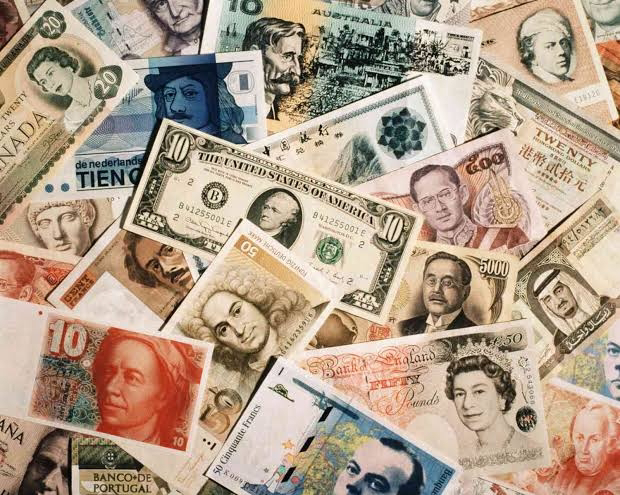
The Strongest Currencies in the World and Their Sources of Strength Introduction: Currency strength is a reflection of a nation's economic stability and global standing. A strong currency can be a sign of a robust economy, fiscal discipline, and political stability. In this article, we will explore the strongest currencies in the world and the reasons behind their strength. Swiss Franc (CHF): The Swiss Franc is one of the world's strongest currencies, and its strength can be attributed to several key factors: a. Switzerland's Stable Economy: Switzerland boasts a highly developed and stable economy. The country is renowned for its financial services, pharmaceuticals, and manufacturing industries, contributing to a steady influx of foreign investments. b. Fiscal Discipline: The Swiss government practices prudent fiscal policies and maintains a low debt-to-GDP ratio, which enhances investor confidence. c. Safe-Haven Status: The Swiss Franc is considered a safe-haven currency, ...

Learned Helplessness: A Psychological Phenomenon and Its Relevance in Economics

Image
Learned Helplessness: A Psychological Phenomenon and Its Relevance in Economics Learned helplessness is a psychological concept that was first introduced by psychologists Martin Seligman and Steven Maier in the late 1960s. It describes a state in which individuals believe that their actions have no influence on the outcomes they experience, leading to a passive acceptance of their circumstances. While this concept originates from psychology, it also has notable implications in the field of economics. The Psychology of Learned Helplessness Learned helplessness typically manifests in situations where individuals repeatedly face uncontrollable or adverse events. Over time, they begin to believe that their efforts are futile, resulting in a sense of powerlessness. This mindset can have a profound impact on one's mental health and overall well-being. The experiment that initially identified learned helplessness involved subjecting dogs to inescapable electric shocks. When these dogs wer...

The Uncommon Economics of War: A Deeper Perspective

Image
The Uncommon Economics of War: A Deeper Perspective Introduction: War has always been a devastating force, impacting nations, societies, and economies in profound ways. While traditional economic analyses often focus on the immediate costs of conflict, this article aims to shed light on some less commonly discussed economic aspects of war that deserve our attention. The Hidden Economic Beneficiaries: We tend to associate war with destruction and loss, but certain industries and businesses actually thrive during times of conflict. The defense industry is an obvious beneficiary, but so are sectors like construction, pharmaceuticals, and technology. War can stimulate innovation, pushing for advancements in areas such as medical treatments, communication, and logistics. The Stimulus Effect: Governments often increase spending during wartime to support their military efforts. While this can lead to higher national debt, it also serves as a stimulus for the economy. The boost in government s...

Revolutionizing Social Science Research: The AI-Powered New Era

Image
Revolutionizing Social Science Research: The AI-Powered New Era The landscape of social science research is experiencing a profound transformation as it embraces the integration of Artificial Intelligence (AI) tools. This new era is marked by the increasing use of AI-driven methodologies, which are enhancing the precision, efficiency, and depth of insights in social science investigations. In this article, we delve into the ways AI is revolutionizing social science research and its potential implications. 1. Big Data Analysis: The hallmark of AI in social science research is its ability to process and analyze vast amounts of data. With AI-driven tools, social scientists can sift through enormous datasets from sources like social media, surveys, and public records. This enables them to detect trends, patterns, and correlations that might have otherwise remained hidden. For example, AI algorithms can identify sentiment analysis from tweets to gauge public opinion on various topics. 2. Pr...